
The National SC/ST Hub, under the micro, small and medium enterprises ministry, with an initial outlay of Rs 490 crore, will work towards strengthening market access/linkage, monitoring, capacity building, leveraging financial support schemes and sharing industry-best practices.

'An armed helicopter equipped with counter-drone systems will provide the airborne counter-drone capability and flexibility needed to protect India's critical assets.'
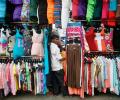
The exporters are optimistic that the industry will grow by 8-10 per cent and it can improve further if the government helps the industry.
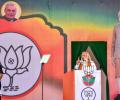
In his first poll rally for the April 6 assembly polls, Modi rooted for the Tamil language, culture and invoked the welfare legacies of M G Ramachandran and J Jayalalithaa, late chief ministers and All India Anna Dravida Munnetra Kazhagam icons.

The SME segment has been grappling with lack of liquidity and lacklustre institutional participation.

Even as Chinese troops continue squatting on territory that we claim as our own -- this was the lowest allocation for defence in percentage terms since the 1950s, reveals Ajai Shukla.

In his address after more than 75,000 people were given appointment letters for various government jobs in the first tranche, Modi acknowledged the challenges facing the economy the world over with many countries hit by a record inflation and unemployment and said India is making every effort to come out of the situation unscathed.

With just a few days left for the suspension on fresh corporate insolvency cases to end, government sources have indicated that another extension is unlikely. An extension may not be economically desirable as it hampers the restructuring prospects for stressed companies, according to senior officials. Also, it would be a challenge to amend the law in such a short time. A Bill would have to be passed in both Houses of Parliament, if any change, with respect to suspension of Insolvency and Bankruptcy Code (IBC), is to be made - including extension or creating any exceptions to the rule.

At this point of time, the requirement of the economy is obviously more investment, which will create more jobs and increase purchasing power that will sustain a high level of production, says K M Chandrasekhar.

Billionaire Mukesh Ambani-run Reliance Industries Ltd's retail arm on Thursday raised Rs 9,555 crore from Public Investment Fund (PIF) of Saudi Arabia, taking total fundraise in the last two months to Rs 47,265 crore. PIF will take a 2.04 per cent stake in Reliance Retail Ventures Ltd (RRVL), the Indian firm said in a statement. The investment values RRVL, the retail arm of Reliance Industries Ltd, at a pre-money equity value of Rs 4.587 lakh crore.
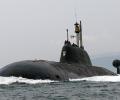
Building 6 conventional submarines is one of the Indian Navy's most important weapon construction programmes.

Long-term capital gains tax may be scrapped and the burden of dividend distribution tax could perhaps be shifted from companies to shareholders. Also, the Budget could provide income tax relief for the salaried classes, while proposing tax sops for small, medium and micro enterprises.

'The fiscal pressure will be there, but the intent of the government behind this move is to spur demand and growth.'
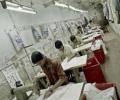
The MSME sector, which is employment-intensive, accounts for 45 per cent of the country's manufacturing, 40 per cent of exports and nearly 8 per cent of gross domestic product.

'Our concern is about today and there is nothing in the Budget for the MSME sector to feel positive right now.'

The stimulus package announced by the government for the revival of the pandemic-hit economy has been found to be "inadequate", according to a Parliamentary panel report. The report of the department-related Parliamentary Standing Committee on Industry on the impact of COVID-19 pandemic on micro, small and medium enterprises (MSME) sector has noted that in the process of economic recovery post-first wave of the pandemic, the second wave has even more vigorously ripped the economy particularly the MSME sector. "The committee observes that the stimulus package announced by the government for the economic revival from the pandemic hit economy has been found to be inadequate as the measures adopted were more of loan offering and long-term measures instead of improving the cash flow to generate demand as immediate relief," it said.

They are now scaling or shutting down their businesses because they can't compete with untaxed grey market gold. India's gold smuggling has increased significantly since the import duty was increased in the Union Budget 2019 in contravention with the broader market expectations of a cut.
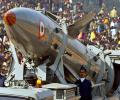
'For Indian firms supplying global majors, coronavirus is both a threat and an opportunity.'

Spurring the economy, currently in the throes of a slowdown, remains the prime focus for most ministries, but the government is also looking to make women's welfare and environmental protection key to policymaking in this term.

This would provide a major boost to the indigenous design and construction capability of submarines in India.
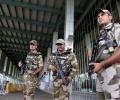
The Union home ministry on May 13 had declared that these canteens will only sell indigenous or "swadeshi" products from June 1 in a bid to give fillip to domestic industries.

The coal-bearing states shall be getting additional revenue from such coal mines.

Particularly hit has been the apparel sector, where the time taken by the industry to adjust to the Goods and Services Tax regime, downward revision of export incentives, and a credit squeeze faced by small and medium scale enterprises, has pushed production downwards.

Probably 35 bps. There could be even an encore in February 2023 to take the policy rate to 6.5% before the financial year ends, predicts Tamal Bandyopadhyay.
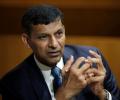
NITI Aayog's Rajiv Kumar accused former prime minister Manmohan Singh and senior Congress leader P Chidambaram of creating a 'false narrative'

Sitharaman said the government wants to sell stake in public sector companies at a time when it fetches the right price.

India took the first step towards legalising drones by officially publishing draft rules for drone operations in the Official Gazette on Friday. The rules, termed The Unmanned Aircraft System Rules, 2020, are open for public consultation for 30 days.

Shifting to floating rate deposits can work as an anaesthetic gel for some customers, points out Tamal Bandyopadhyay.

In eight major MSME-centric product groups, imports from China grew the fastest.

The BJP-led National Democratic Alliance released its manifesto for the February 20 Punjab polls on Saturday, promising a slew of sops for various sections, including 75 per cent reservation in all government jobs for youngsters from the state, an unemployment allowance, 35 per cent reservation for women in government jobs and massive infrastructure development.

In a bid to push its current revenue of 20 per cent from the small and medium business segment in India, Germany-based enterprise software major SAP on Monday announced the launch of mySAP all-in-one solutions for micro-verticals.
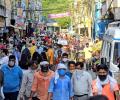
Like on Pegasus, like Covid, there have been no answers from the government about why the situation on the economy and India's future is where it is today, notes Aakar Patel.

'The digital trust level has drastically gone up due to Covid, not only in tier-I and II cities, but also in tier-III, IV and V geographies,'

'The revival of household savings and investment is the litmus test of whether we are on the road to recovery,' says Nitin Desai.

The labour ministry has made public a list of 60 officers -- essentially labour commissioners in 20 regions across the country -- along with their e-mail address and contact numbers. They will deal with distress calls from workers who are working under the 'central sphere'.

There could be multiple measures announced in quick succession, not only by the finance minister but also other ministers regarding their respective sectors, and by the Reserve Bank of India. The total size of these announcements could rival that of other G-20 nations as a percentage of GDP.

In the concluding article of a six-part series, Business Standard visits Ludhiana, one of the largest industrial towns in Punjab, to assess the effect of demonetisation.

In a bid to support revival of sectors hit most by the Covid-19 pandemic, Reserve Bank of India on Friday decided to open a separate liquidity window of Rs 15,000 crore for certain contact-intensive sectors like hotels and restaurants, tourism and aviation ancillary services.

The Survey says that present skilled workforce in India is only 2%.

The BJP's manifesto speaks about the Prime Minister's vision of making 'Atmanirbhar Bihar'.
 © 2026 Rediff.com - Advertise with us - Disclaimer - Privacy Policy - Sitemap - Feedback - About us - Terms of use - Grievances